A tiny chip in the brain can now turn a paralyzed person's intended words into text on a screen, or into a voice through a speaker. No typing. No movement. Just the brain signals that fire when someone tries to speak. US regulators have cleared the first human test of a device built to do exactly that.
The company is Paradromics, a brain-computer interface startup in Austin, Texas. A brain-computer interface (a device that turns brain signals into commands for a computer) reads the electrical chatter of neurons and feeds it to software that decodes what the person meant to do. On November 20, 2025, the FDA (the US agency that approves medical devices) gave Paradromics the green light to start a small trial in people.
What the FDA actually approved
This is the part the headlines blur. The FDA did not approve the device for sale. It granted something called an Investigational Device Exemption, or IDE; basically a permission slip to test an experimental device in humans under strict safety rules. The specific study is called Connect-One, and it starts with just two people. Paradromics says it's the first IDE approval for restoring speech with a fully implanted brain-computer interface. First of its kind. Big deal, but still a trial.

It doesn't read your thoughts
Let's kill the sci-fi version right now. The implant does not read minds, and it can't pull random thoughts out of your head. It listens to a specific spot, the motor cortex, which is the part of the brain that drives the lips, tongue, and voice box. When you try to say a word, those neurons fire in a pattern. The device records the pattern; software learns to map it onto sounds and words. That's it.
So the honest phrase is "decoding intended speech", not "hearing thoughts." The person has to actively try to talk. Nothing private gets siphoned out while they sit there thinking about lunch.
Nature Brain Implant Could Rival Neuralink's Enters
How it's built
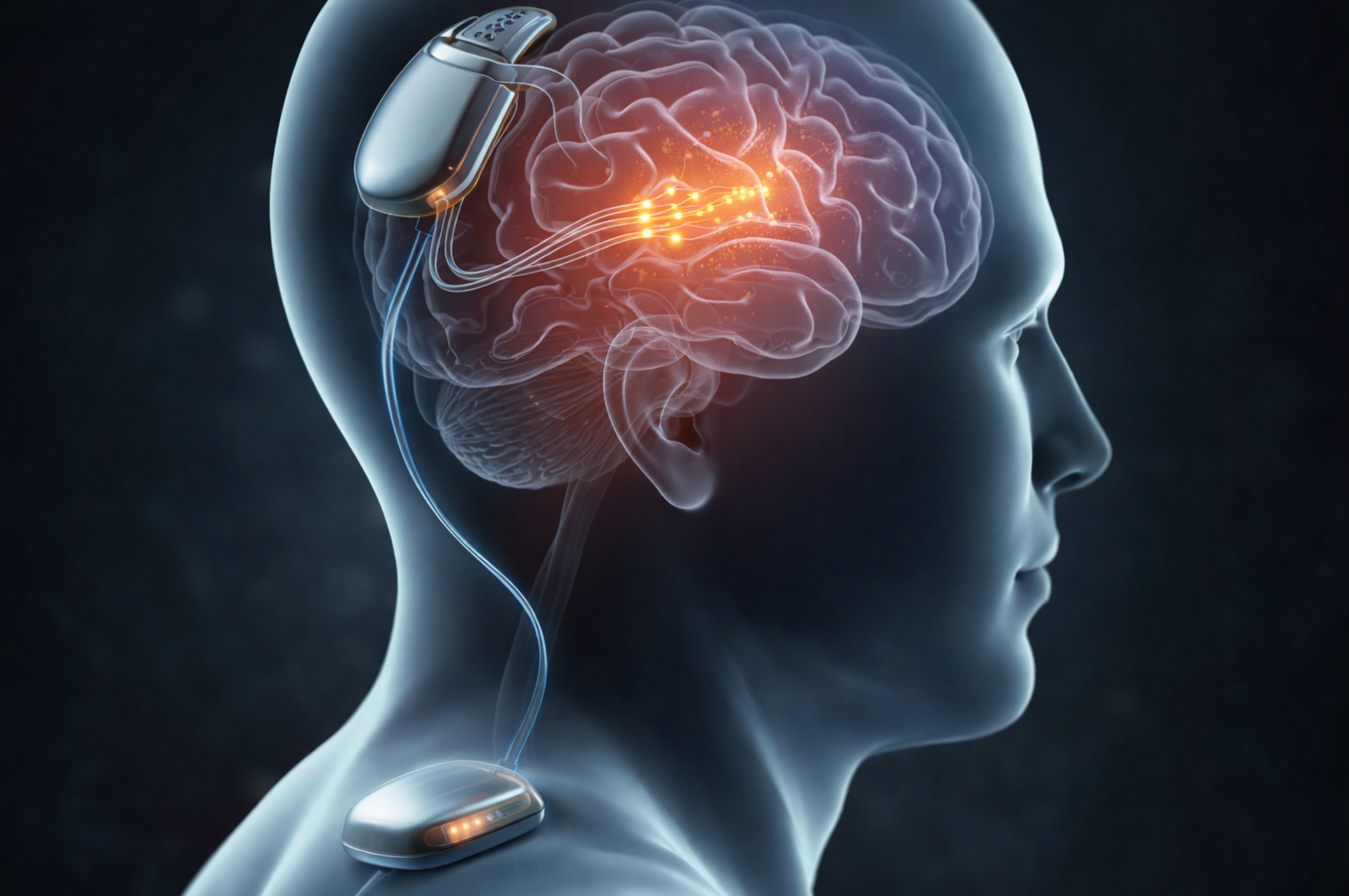
The hardware is dense. The implant, called Connexus, packs 421 microwire electrodes, each thinner than a hair, into a module that pokes about 1.5 millimeters into the brain near the motor cortex. A titanium piece sits under the skin of the skull. A thin cable runs to a transmitter in the chest, and an external wearable powers the whole thing wirelessly. No wires poke through the skin, which lowers the infection risk.
The same signals could one day move a cursor too. If that works, one implant might let someone type, click, and talk by intention alone, similar to what Neuralink showed with its N1 chip.
The problem nobody has solved
Here's the catch. Brain implants tend to fade. The body wraps the electrodes in scar tissue made of glial cells (the brain's support cells), and that muffles the signal over time. It isn't rejection like a transplant, but the result feels similar; performance can drop within months, sometimes over a couple of years. Engineers have thrown flexible wires, stiff wires, and special coatings at it. Better, yeah, but not fixed.
And there's an ethical knot. Critics say handing someone their voice back, only to watch it slip away, can be cruel without a long-term plan. Supporters counter that the volunteers know the risks and that progress depends on people willing to take them. Honestly, both sides have a point.

Not a cure, and not magic
Let's be clear about the ceiling here. This is not a cure for paralysis, and the researchers say so plainly. The goal is to restore communication and buy time, not to repair the nervous system. Two participants. One early study. Years of work ahead before anyone calls it a product, if it ever gets there at all.
The hype machine will run hot on this, because "brain chip" headlines always do. But the real story is narrower and more honest: a small, carefully watched test of whether a dense electrode array can give a few people who can't speak a way to be heard. That's worth rooting for. It's also a long way from done.